
It is found in the northern Atlantic Ocean basin (Gulf of Gascogne, Barents Sea, Iceland, Arctic Circle and Greenland Coast), in the Baltic Sea, in the freshwater waters of the Swedish and Finnish Lapland.
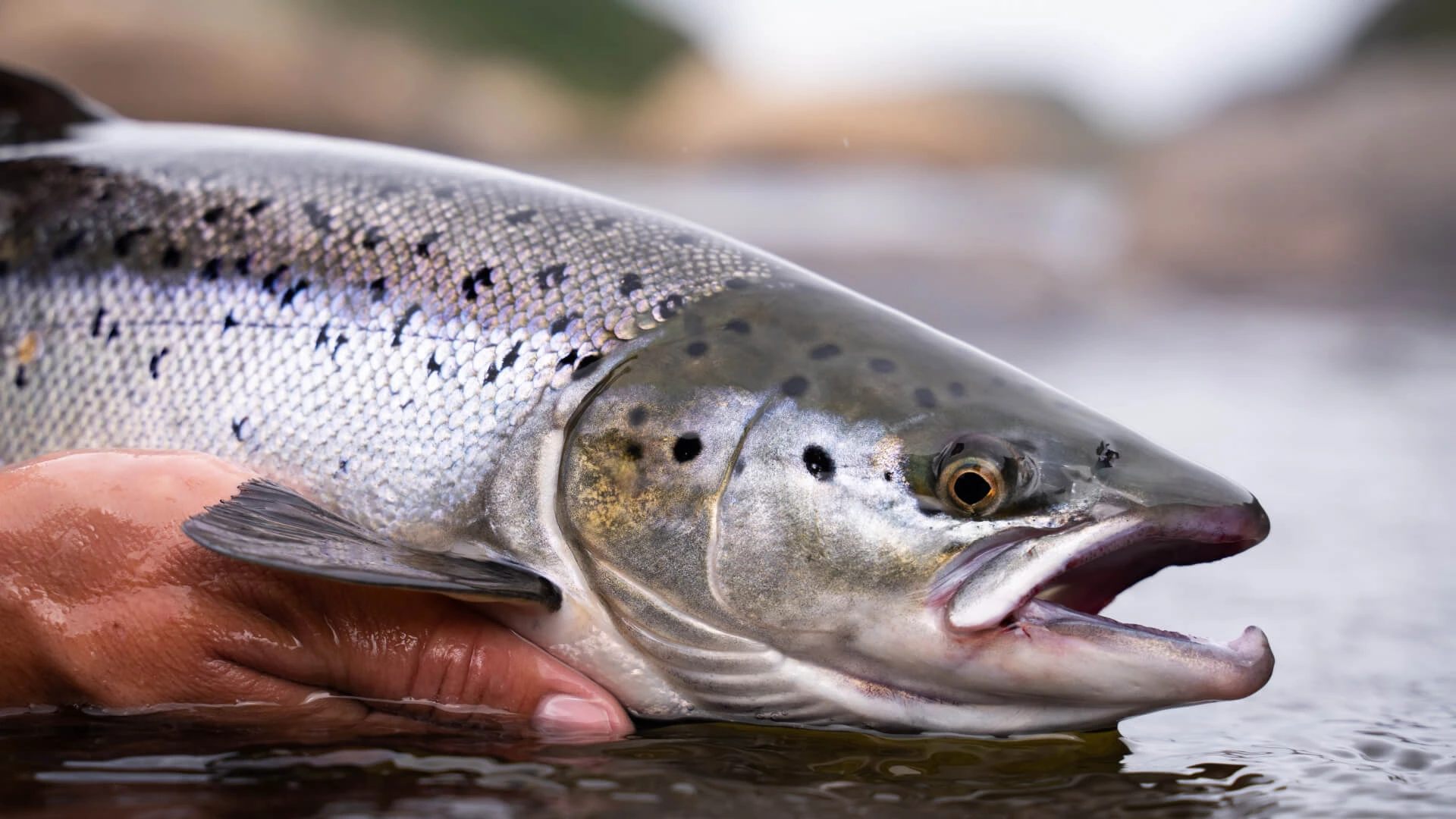
Atlantic salmon are the largest species in their genus, Salmo. After two years at sea, the fish average 71 to 76 cm (28 to 30 inch) in length and 3.6 to 5.4 kg (7.9 to 11.9 lb) in weight. But specimens that spend four or more winters feeding at sea can be much larger. The colouration of young Atlantic salmon does not resemble the adult stage. While they live in fresh water, they have blue and red spots. At maturity, they take on a silver-blue sheen.
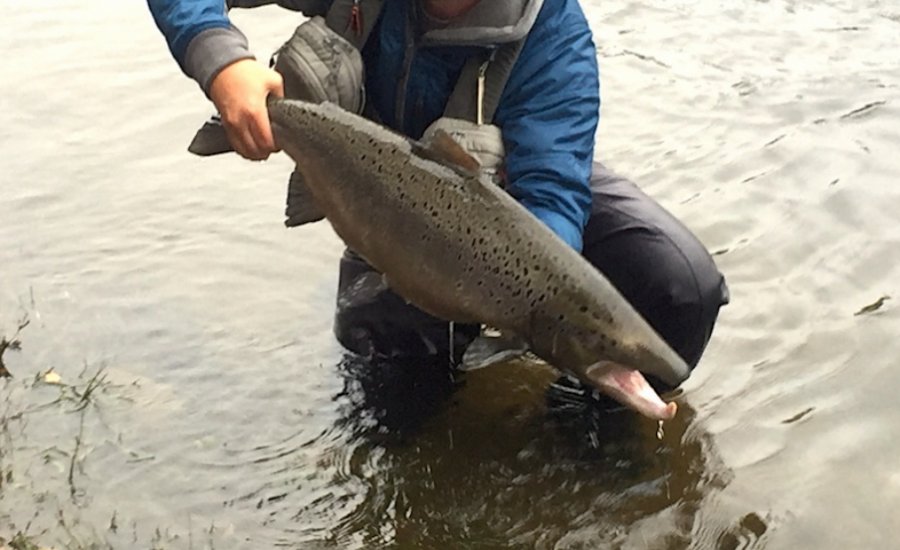
The easiest way of identifying them as an adult is by the black spots predominantly above the lateral line, though the caudal fin is usually unspotted. When they reproduce, males take on a slight green or red colouration. The salmon has a fusiform body, and well-developed teeth. All fins, except the adipose fin, are bordered with black.
The natural breeding grounds of Atlantic salmon are rivers in Europe and the northeastern coast of North America. In Europe, Atlantic salmon are still found as far south as Spain, and as far north as Russia. Because of sport-fishing, some of the species’ southern populations in northern Spain are growing smaller. The species distribution is easily influenced by changes in freshwater habitat and climate.
Atlantic salmon are a cold-water fish species and are particularly sensitive to changes in water temperature. Wild salmon disappeared from many rivers during the twentieth century due to overfishing and habitat change.